La Brique, The Brick, Cărămida
14.02.201928.04.2019
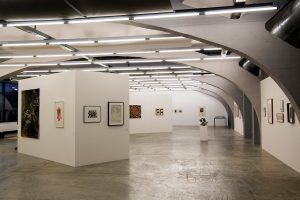
La Brique, The Brick, Cărămida, curated by Ami Barak, brings forward a dynamic and creative artistic scene, from the beginning of the XXth century until now.
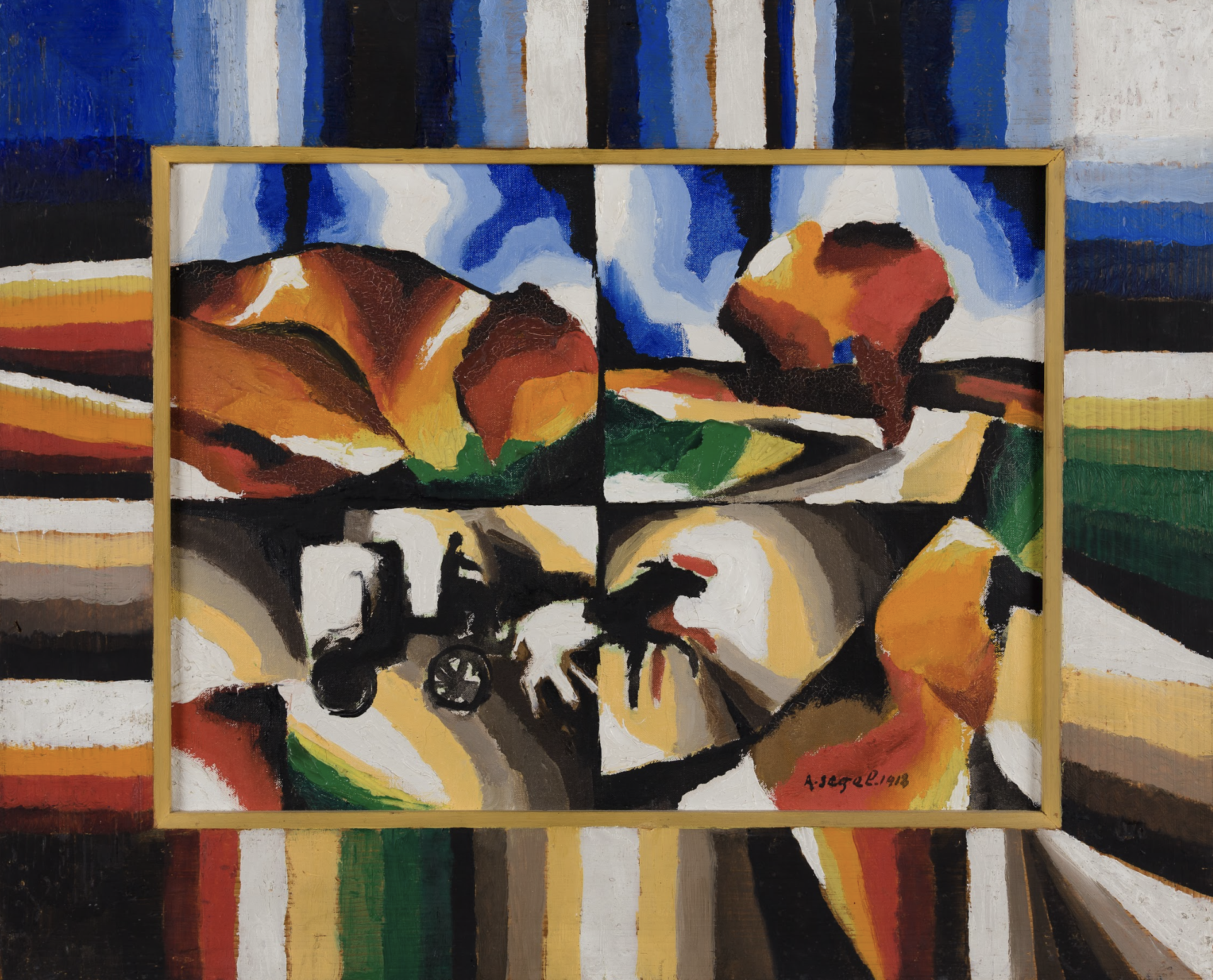
(1875-1944)
Born in Romania, moved to Berlin in 1892, where he studied at the Academy of Art under the mentorship of painter Eugen Bracht. Initially attracted by Impressionist painting, he moved to Paris in 1895, later settling in Monaco, Bavaria, where he became close to the painting of Swiss artist Giovanni Segantini. From 1908, there was a transition to Expressionist painting and a rapprochement with Herwarth Walden, owner of Galerie Der Sturm. During the war, Segal developed the theory of equivalence in his compositions, which completely changed his artistic approach. In Zürich, he took part in the Cabaret Voltaire exhibitions through his connections with Hans Arp and Hugo Ball, and in 1922 produced his first prismatic paintings derived from his theories. This new pictorial style established him as one of the greatest modernist painters. During the genocide of the Jews, precisely because of his Jewish origin, he had to take refuge in Spain, and after the war emigrated to England, where he opened a painting school.
The painting on display is one of the most representative of the period’s research into compositional innovation and his modernist theories on representation and visuality.
He divided his canvases into geometric units and reproduced the same compositional scheme. The construction of his paintings attempts to establish a narrative, in which the theoretical research of geometric construction and alternating colors are intrinsically intertwined.