Is known as one of the founders of Dadaism. During his studies at the University of Bucharest, he published in the magazine Le Symbole, alongside Ion Vinea and Marcel Iancu. In the first part of his work to spread the Dadaist movement, Tzara published various manifestos and supported performances designed to combat the bourgeoisie and provoke the audience to ask questions about the society of his time. In 1920, he moved to Paris, where he continued his series of performances in close collaboration with André Breton and Francis Picabia. After a few years, and following the publication of two manifestos by André Breton, Tzara felt he could better identify with Surrealist principles and continued to create art along these lines. Tristan Tzara paved the way for the avant-garde movements that soon followed around the world, and which in turn changed the history of art.
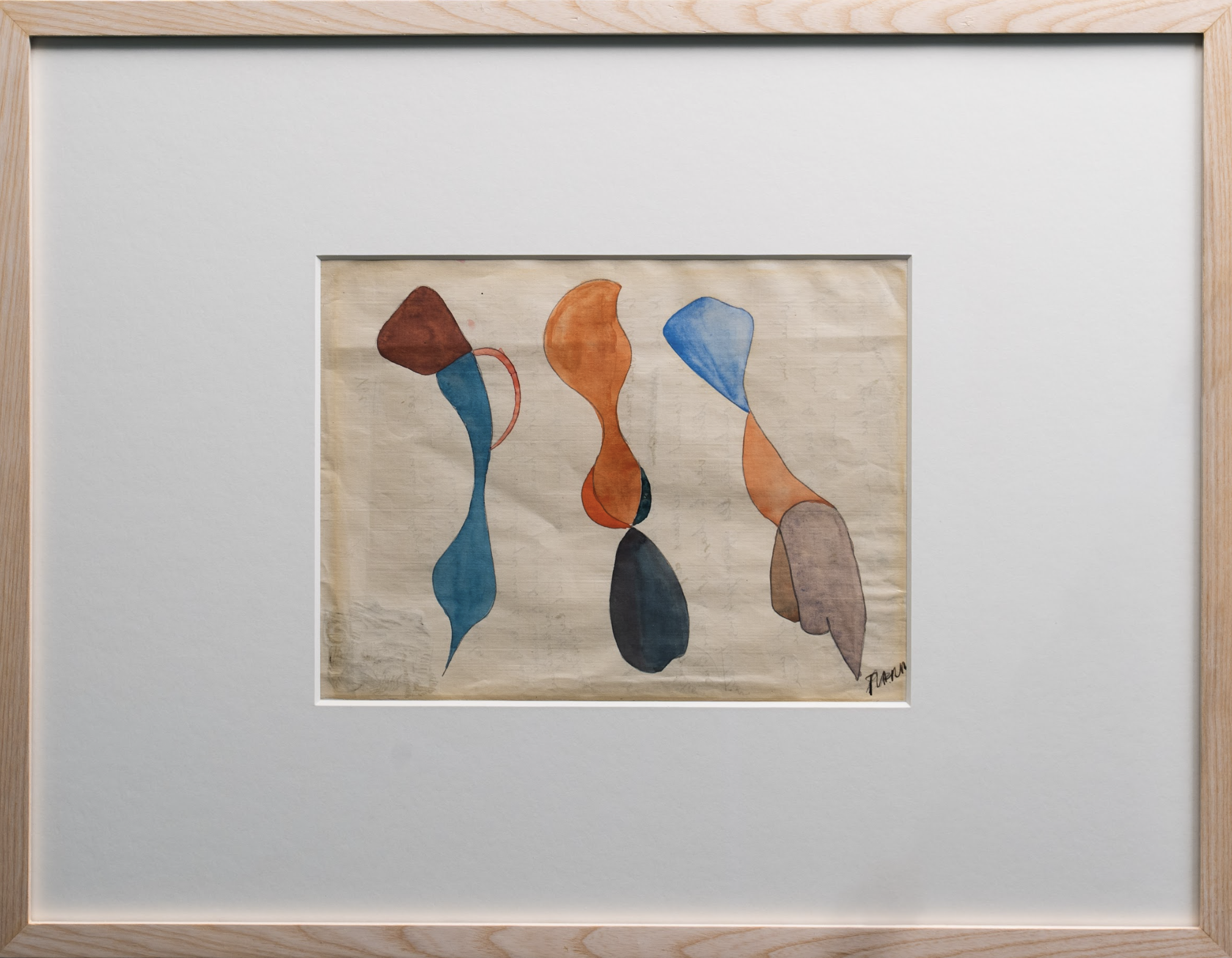
Tristan Tzara was the leader of the Dada movement. In 1915, the date of this composition, he fled Romania for Zürich, where he was one of the founders of the Cabaret Voltaire. It was during this period that he wrote several manifestos against the war, but also against the established shackles of literature and art.
In a period of revolutionary infatuation, his painting and his works detached themselves from any attachment to forms and rules, moving towards Surrealism and poetry.